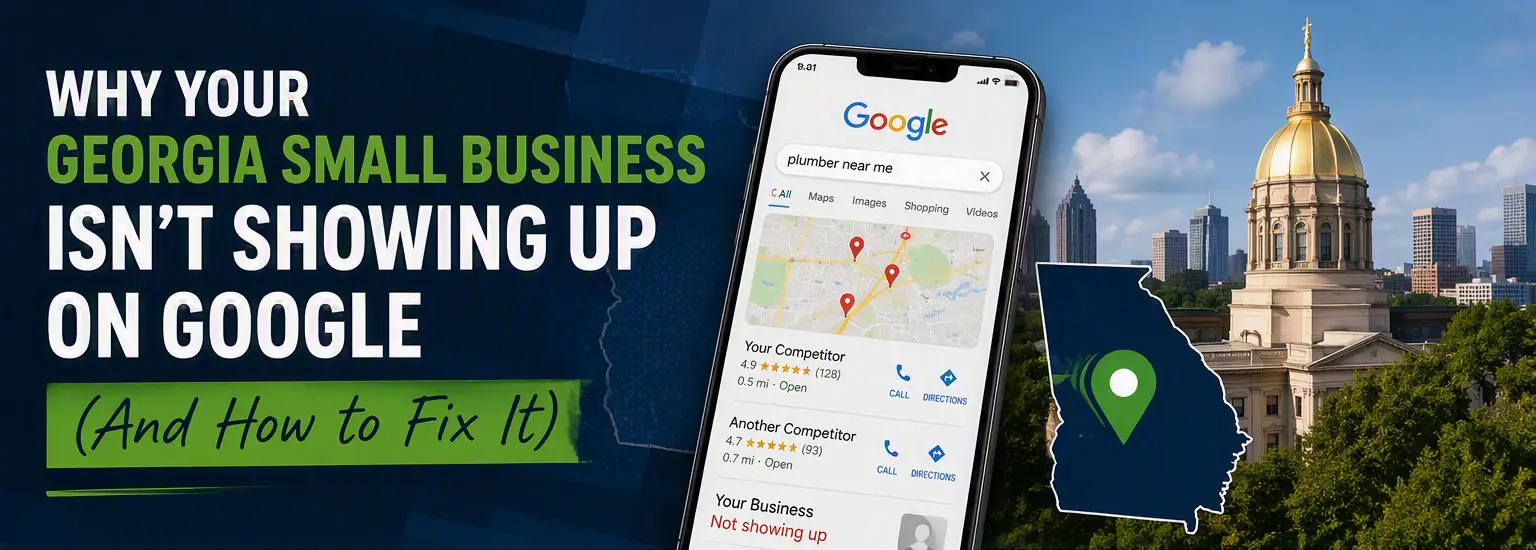
Below there is a lot of negativity, but the truth hurts. I promise the cure is there as well.
You’re Not Getting Enough Reviews
Reviews are more than social proof.
They help potential customers decide whether to call you, and they help Google understand that your business is active and trusted.
Think about your own behavior. If you’re choosing between two contractors and one has 85 reviews while the other has 4, which one are you calling first?
Many business owners provide excellent service but never ask for reviews. Over time, competitors who consistently request customer feedback build a stronger online reputation and often earn more clicks.
A simple review request after every completed job can make a dramatic difference.
Your Website Is Too Slow
People are impatient online.
If your website takes several seconds to load, many visitors will leave before they even see what you offer.
Slow websites can be caused by:
- Oversized images
- Cheap hosting
- Excessive plugins
- Poor site configuration
- Outdated themes and software
A fast website creates a better user experience and helps visitors stay engaged long enough to become customers.
Your Site Isn’t Mobile Friendly
Most local searches now happen on smartphones.
A customer searching for an emergency plumber, electrician, or HVAC company isn’t usually sitting at a desktop computer. They’re standing in a kitchen, driveway, or office building looking for immediate help.
If your website is difficult to navigate on a phone, has tiny text, or requires excessive zooming and scrolling, you’re losing opportunities.
A modern local business website should:
- Load quickly on mobile devices
- Display correctly on all screen sizes
- Make phone numbers easy to tap
- Make contact forms simple to complete
The easier you make it for customers to contact you, the more leads your website can generate.
You’re Missing Location-Specific Content
Many businesses create a single services page and assume that’s enough.
The problem is that Google tries to provide results relevant to specific locations.
If you serve multiple cities, your website should help Google understand that.
For example, an HVAC company serving Carrollton, Douglasville, Villa Rica, and Dallas should have content that clearly explains its services in each area.
Location-specific pages help search engines connect your business with local customers searching in those communities.
Your Competitors Are Simply Doing More
Sometimes the answer is straightforward.
Your competitors may be:
- Publishing helpful content
- Gathering more reviews
- Updating their websites
- Improving local SEO
- Optimizing their Google Business Profiles
- Building stronger online authority
The good news is that most local markets are far less competitive than people think. Consistent improvements often produce meaningful results over time.
You don’t have to become the largest company in your market.
You simply need to become easier to find than the businesses around you.
What You Can Do Today
If your business isn’t showing up where you’d like on Google, start with these five steps:
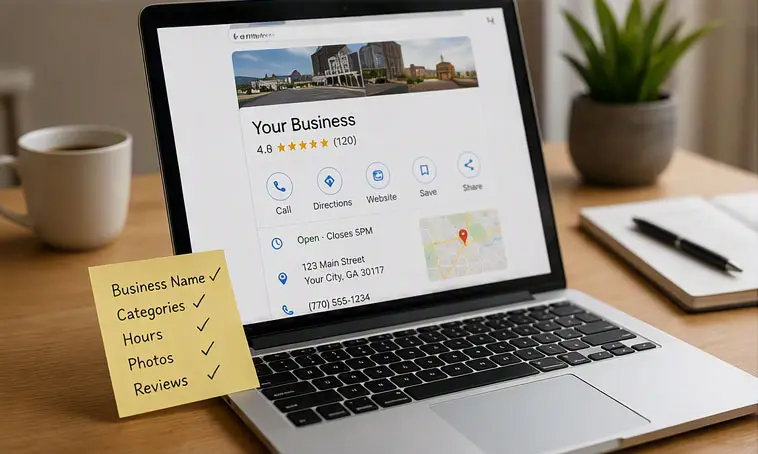
- Review your Google Business Profile and complete every section.
- Ask recent customers for honest reviews.
- Test your website on a mobile phone.
- Make sure your services and service areas are clearly listed.
- Research the phrases your customers actually use when searching.
None of these steps require a massive budget. They simply require attention and consistency.
Final Thoughts
The businesses that consistently win online aren’t always the biggest, oldest, or most well-known companies in town.
They’re usually the businesses that make it easy for Google to understand who they are, what they do, and where they provide their services.
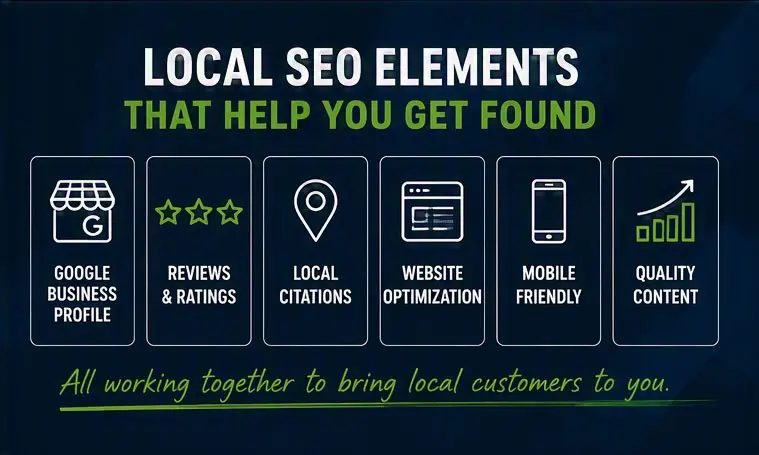
When your website, Google Business Profile, reviews, and local SEO all work together, you’re no longer hoping customers find you.
You’re putting your business directly in front of people who are already searching for exactly what you offer.
And that’s where real growth begins.